
The Sensex finally ended at 16,053, down 231 points. The NSE Nifty finally settled at 4,751, down 76 points.
September 15, 2008 -- shockwaves went through the world financial markets, as it was hit by the biggest bankruptcy in history.
NSE Nifty closed at 4,867, up 14 points.

Growth stocks are not located in the traditional well-known sectors but in new and upcoming fields
The Reserve Bank of India and the Securities and Exchange Board of India are considering a proposal for allowing Indian mutual funds to invest up to $1 billion in world's biggest companies through equity indices like Dow Jones Global Titans Index.
What should you do when the markets crash by as much as 1,500 points? Buy, sell, hold or add more to your long-term portfolio.
Even before the Wall Street the world's stock market hub in New York - opened on the 20th anniversary of the original Black Monday today, the domestic stock market's benchmark Sensex plunged over 438 points.

Asset-weighted returns of large cap funds lagged their benchmark by 273 basis points, ELSS funds by 318 bps and mid- and small-cap funds by 230 bps.

In China, the toll stood at around 3,250 and in Italy it was 3,405.
On the lines of Shariah-compliant products, intermediaries ask exchanges to consider investment benchmark.
Benchmark BSE Sensex rose by 319 points on Monday on gains in IT and financial stocks after positive quarterly results amid supportive global cues. The 30-share BSE barometer rose by 319.90 or 0.53 per cent to close at 60,941.67. The index opened higher and gained more than 400 points to scale the 61,000 level. It touched a high of 61,113.27 and a low of 60,761.88 in the day.

Investors' wealth eroded by more than Rs 2.21 lakh crore in early trade on Wednesday, with the market witnessing a selling-off amid prospects of aggressive rate hikes by the US Federal Reserve to tackle high inflation, and sluggish global trends. In less than an hour of the start of trading on Wednesday, the key indices -- Sensex and Nifty -- were deep in the red and witnessed significant volatility, reflecting jittery investor sentiments. The market capitalisation of BSE-listed companies, which is also an indicator of wealth of investors, tumbled more than Rs 2.21 lakh crore to Rs 2,84,49,727.56 crore amid the 30-share Sensex falling 564.76 points to 60,006.32 points.

Over 87 per cent of active large-cap schemes failed to outperform the benchmark S&P BSE 100 (total return) in the 2022 calendar year (CY), significantly higher than the 2021 figure of 50 per cent, shows a report by S&P Dow Jones Indices. During the three-year period (CY 2020, '21, '22), the percentage of schemes underperforming the index was even higher at 97 per cent. While active large-cap schemes generally find it tough to outperform due to a rising efficiency in the market, 2022 proved to be even more challenging as mid-cap and small-cap stocks (where they have some allocation) performed poorly vis-a-vis the large-caps.

Among Sensex shares, HDFC Bank fell the most by 2.58 per cent, followed by SBI (2.12 per cent), HDFC (2.09 per cent), and IndusInd Bank (2.02 per cent). Axis Bank, Bajaj Finserv, M&M, L&T, Reliance, Infosys and TCS were among the major losers. In contrast, Tata Motors, Maruti, NTPC, Sun Pharma, Power Grid and Titan were among the gainers.
Fund managers of large-cap and equity-linked saving schemes (ELSS) have demonstrated a marked improvement in their performance over the past year, according to the latest SPIVA (S&P Indices Versus Active) report released by S&P Dow Jones Indices. In the one-year period ending June 2023, 17 per cent of active large-cap schemes outperformed the S&P BSE 100, compared to just 9 per cent at the end of June 2022. In the case of ELSS, there was a sharp improvement in performance, with 66 per cent of active schemes delivering better returns than the benchmark S&P BSE 200.
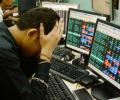
M&M was the biggest loser in the Sensex chart, falling 6.39 per cent, followed by Tech Mahindra, Nestle India, Bajaj Finance, Axis Bank, ITC, JSW Steel, HDFC Bank and RIL. On the other hand, Sun Pharma, Tata Motors, Bharti Airtel, L&T and Infosys were among the winners, rising up to 2.10 per cent.

Major global indices - the Nasdaq, Bovespa, Seoul Composite, S&P 500, Dow Jones, S&P BSE Sensex, NYSE, DAX, Nikkei and, CAC 40 - have all gained 37 per cent to 75 per cent since their respective March 2020 low.

Two firms belonging to the Adani group - India's most valued conglomerate - are part of the Nifty 50 index. The group, however, has no representation in the Sensex. And it could stay this way if a proposed index qualification rule change gets approved. Recently, Asia Index, a joint venture between S&P Dow Jones Indices and BSE responsible for index composition, floated a consultation paper where it proposed that a stock must have a derivative contract to be eligible for inclusion in the flagship 30-share Sensex index.

The Dow has never lost more than 800 points in a day.

Benchmark Sensex trimmed early gains to close marginally higher while Nifty settled flat in choppy trade on Tuesday as gains in auto shares were offset by selling pressure in banking and energy shares. The 30-share BSE barometer closed marginally up by 37.08 points or 0.06 per cent to 60,978.75 with 15 of its stocks ending in green and the rest in red. The index opened higher and gained over 300 points to a high of 61,266.06 in early trade.

Investors should use a mix of active and passive funds.

Indian passenger vehicles market registered record wholesales of 43 lakh units in 2024, with companies like market leader Maruti Suzuki, Hyundai, Tata Motors, Toyota Kirloskar Motor, and Kia posting their best-ever annual domestic sales. The continued growth of SUVs, along with rural markets playing a key role in driving up car sales, helped the industry better the previous best of nearly 41.1 lakh units posted in 2023.

Technical fault was the reason behind it.

'The first half of 2019 could be volatile.' 'In the second half, volatility inducing events should be largely behind us.'

Gold prices are struggling and are down 18 per cent from their March highs. But stock prices have fallen even more. As a result, the precious metal has begun to outperform equities - both in the domestic market and international markets. Gold prices are up 2.6 per cent in the domestic market in the current calendar year (CY22) so far, according to the World Gold Council (WGC), compared to a 1.7 per cent decline in the Sensex year-to-date (YTD).

Monday's drop followed an 8.5 per cent slump in Chinese markets.

The broad-based Nifty slipped below the 8,600-level by losing 24.60 points, 0.28 per cent, to 8,590.65

From the 30-share pack, Asian Paints, Reliance Industries Limited, Bajaj Finance, Mahindra & Mahindra, Indusind Bank, Bajaj Finserv, Maruti Suzuki, HDFC Bank and UltraTech Cement were the major gainers, jumping up to 5.56 per cent.
Sensex has shed over 150 points in afternoon trade.

From the BSE 30-share blue chip pack, 27 scrips ended with losses led by SBI and Tata Steel.

The benchmark Sensex companies' underlying earnings per share are down 3 per cent (on a cumulative basis) since January 2015, against 25 per cent rise in the index value during the period
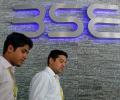
Sebi will soon put in place new norms for changes in constituents of the key stock market indices.

'India's fundamentals are a lot better (than those of other emerging market economies).' 'India will suffer (witness a fall in its stock market) what I call the second order effect.' 'And the second order will happen when these funds (belonging to macro and hedge fund investors and which have leveraged Japanese yen-carry trades), because they lose money elsewhere as lot of their positions were financed by borrowing Japanese yen, will have to book profits in investment destinations where they are making money, including in markets like India.' 'They (these investors) will have to effectively sell in countries like India and which is the consequence (the crash in equity markets) that Indian markets might see.'

Kotak Bank was the top loser in the Sensex pack, falling around 3 per cent, followed by Axis Bank, Sun Pharma, HDFC Bank, Bajaj Finance and Asian Paints. On the other hand, ONGC, PowerGrid and IndusInd Bank were the gainers.

L&T was the top gainer in the Sensex pack, spurting over 6 per cent, followed by Hero MotoCorp, HDFC Bank, IndusInd Bank, Maruti, HDFC and HCL Tech. On the other hand, ITC, SBI and Bharti Airtel ended in the red.
The 30-share BSE index reclaimed the 30,000-mark to trade at a new record high of 30,071.61 by surging 128.37 points, or 0.42 per cent. This surpassed the previous record high of 30,024.74 (intra-day) that the Sensex touched on March 4, 2015.

In a historic referendum on Thursday, the United Kingdom voted to leave the Eurozone.
On BSE, 1,826 shares declined and 982 shares rose, while a total of 194 shares were unchanged

Many giving double-digit returns, with India up less than one per cent; even so, it has done much better than other emerging markets.
